Operational context
Field work creates information at different times and in different formats: client and location details, work descriptions, photographs, materials, observations and customer confirmation. When those elements remain on paper, in conversations or in separate folders, finding a complete history becomes slow and vulnerable to omissions.
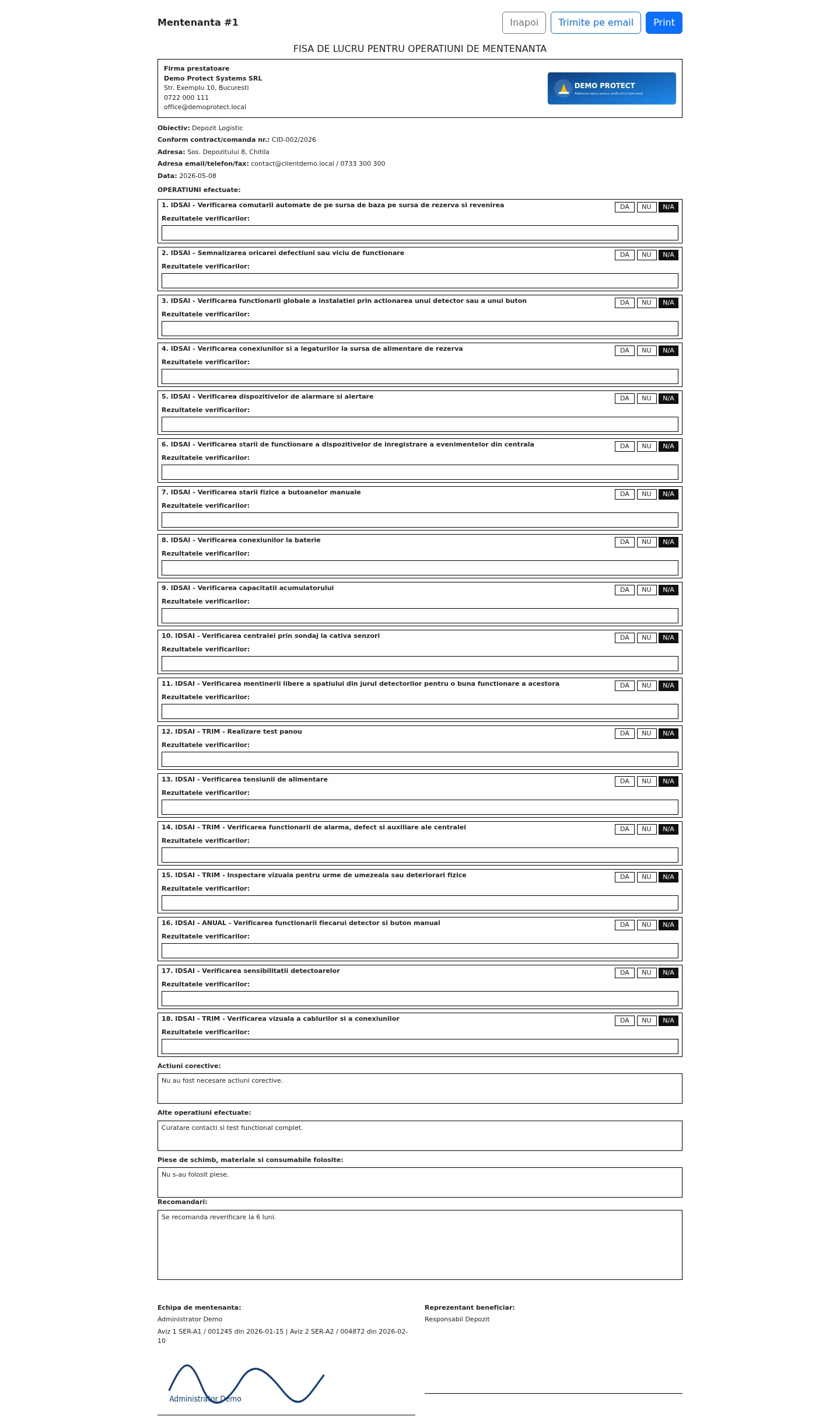
The product is organized around one clear unit of work: the service report. Each report connects completed work to a client and location, preserves available evidence and produces a final document that can be shared or archived.
- users completing a report during or immediately after a visit;
- clients and locations providing context and history;
- photographs and signatures linked to the same activity;
- a consistently generated PDF document;
- later retrieval without manually reconstructing the context.
Product decisions
The interface follows a short and repeatable flow. A digital report should not turn a technician into a data-entry operator; fields, validation and step order need to match the way an intervention is performed.
Separating structured data from the resulting document matters. The PDF remains practical for sharing and archiving, while structured data supports filtering, retrieval and later extensions. This prevents the final file from becoming the only source of information.
Publicly verifiable capabilities
The public PV Digital website describes digital service reports, attached photographs, signature capture, PDF generation and history by client or location. These are product capabilities rather than a conceptual scenario.
What the project demonstrates technically
PV Digital is relevant to projects combining a web interface, accounts, business entities, files, signatures and document generation. These functions require a coherent data model, server-side validation, access control, safe storage and explicit handling of steps that depend on files or connectivity.
The product also demonstrates why post-launch operations matter. A platform used for current work needs monitoring, updates, backups, support and incremental change rather than only an initial delivery.
Where the same approach applies
The model is useful when a team performs work, collects evidence and delivers a standardized confirmation. We do not assume that the existing product fits every company; custom projects review the fields, roles, approvals, integrations and documentation requirements of that organization.
- technical service and maintenance;
- installations and commissioning;
- field inspections, checks and audits;
- handover and activity confirmation;
- customer portals exposing documents and history.
Does your field workflow still depend on paper, files and messages?
We can review the steps, evidence, documents and integrations and determine whether PV Digital, a dedicated configuration or custom software is the appropriate approach.
Discuss your project